 Where the sand meets the water · Photo: Hameen Reynolds / Unsplash
The Daytona, reference by reference
Built for endurance racing drivers in 1963 and named after the Florida speedway. Here are the main references, in order, and what changed each time.
- First made
- 1963
- References shown
- 11
- Status
- In production
-
1953–68[PHOTO NEEDED
REF. 6036]REF. 6036 · 6234 · 6238BEFOREBefore the name
Rolex made Oyster chronographs (watches with a built-in stopwatch) for a decade before the Daytona. These are its ancestors.
-
1963–69[PHOTO NEEDED
REF. 6239]REF. 6239The first Cosmograph
Rolex launches the Cosmograph for endurance race drivers: a hand-wound chronograph with the speed scale engraved on a steel bezel. The word “Daytona,” after the Florida speedway built in 1959, didn't appear on dials until 1965. Paul Newman's own 6239 sold for $17.8 million in 2017.
-
1965–69[PHOTO NEEDED
REF. 6241]REF. 6241Black bezel
Same idea with a black acrylic bezel insert. Some 6239s and 6241s left the factory with “exotic” dials, the style collectors now call “Paul Newman.”
-
1965–69[PHOTO NEEDED
REF. 6240]REF. 6240Screw-down pushers
Made in very small numbers. It tried out screw-down chronograph pushers, which seal the buttons against water.
-
1970–72[PHOTO NEEDED
REF. 6262]REF. 6262 · 6264A new movement
The newer calibre 727 movement arrives. The steel-bezel 6262 was made for about one year, so both are rare today.
-
1971–88[PHOTO NEEDED
REF. 6263]REF. 6263 · 6265Waterproof at last
Screw-down pushers become standard, so the Daytona can finally take water. The 6263 has a black acrylic bezel; the 6265 has steel. From 1972, “Big Red” dials printed “Daytona” in red. These were the last hand-wound Daytonas.
-
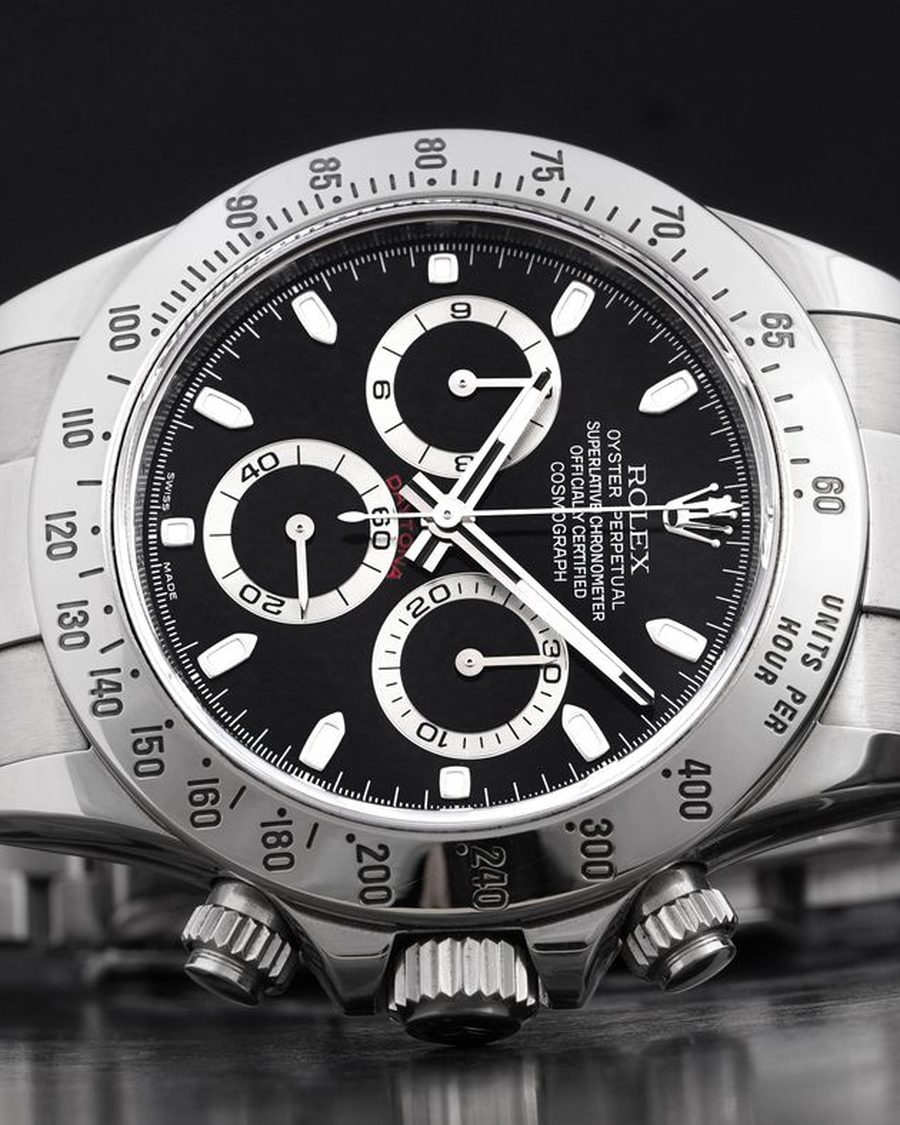
1988–2000
Photo: Quang Viet Nguyen · Pexels License REF. 16520The Zenith Daytona
The first self-winding Daytona: a 40 mm case and a movement built on Zenith's El Primero, then heavily reworked by Rolex (calibre 4030).
-
2000–16[PHOTO NEEDED
REF. 116520]REF. 116520Made by Rolex
Calibre 4130, the first chronograph movement Rolex designed and built itself. It ran 16 years.
-
2013[PHOTO NEEDED
REF. 116506]REF. 116506SIDE ROAD50th birthday in platinum
A platinum Daytona made to mark the model's 50th anniversary.
-
2016–23
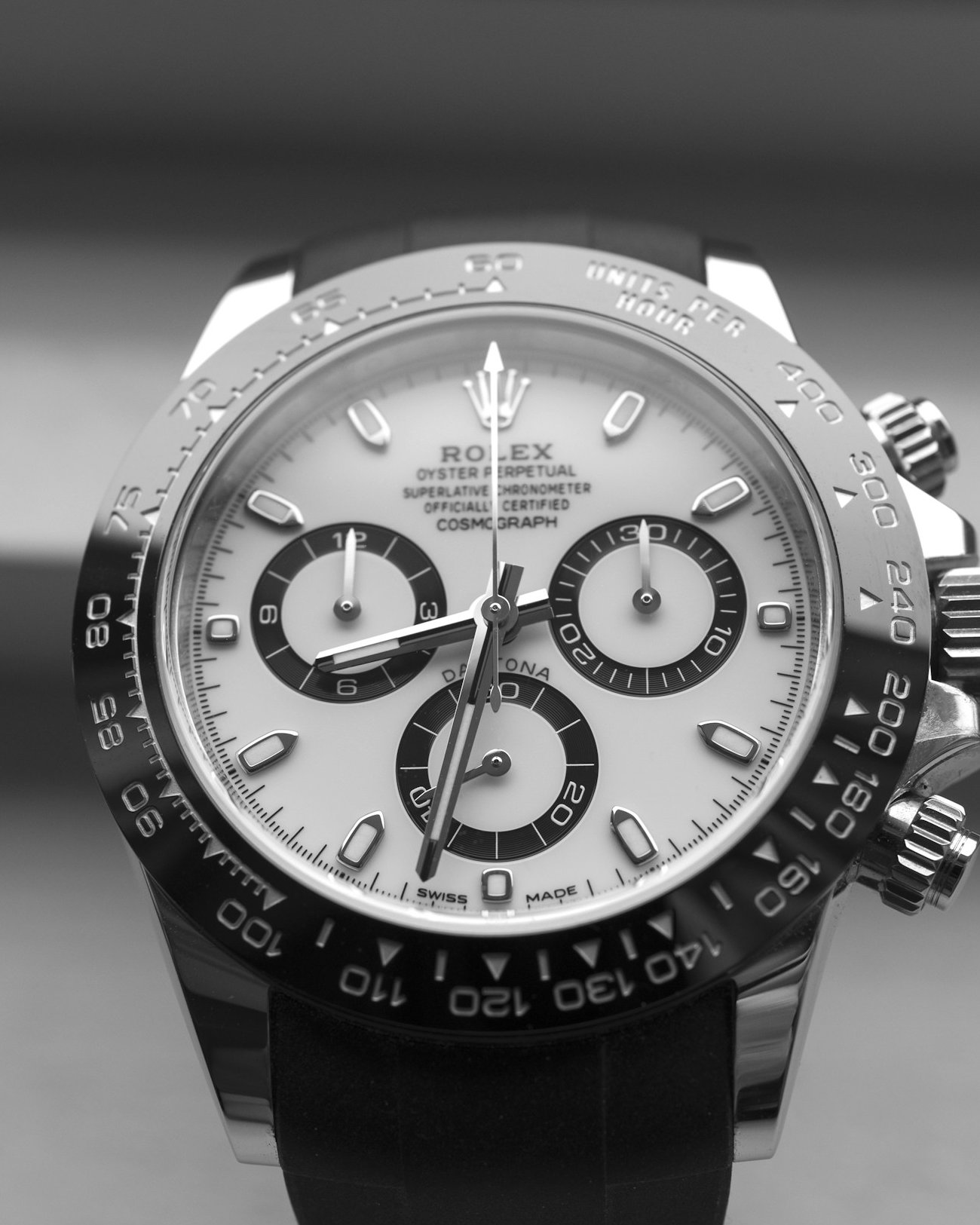
Photo: Lightscape · Unsplash License · cropped
Shown: a white-dial “panda” Daytona of this generation, on an aftermarket rubber strapREF. 116500LNCeramic arrives
Shown at Baselworld 2016: the first steel Daytona with a black Cerachrom bezel, Rolex's scratch-proof ceramic. Still calibre 4130 inside.
-
2023–today[PHOTO NEEDED
REF. 126500LN]REF. 126500LNTODAYToday's Daytona
The headline change is inside: the new calibre 4131 movement.
What never changed
THE TACHYMETER BEZEL
The speed scale on the bezel, for timing a lap and reading your average speed.
THREE SUBDIALS
Small dials that count running seconds, minutes, and hours on the stopwatch.
BUILT FOR RACING
Named for Daytona Beach, Florida, where the speedway opened in 1959.
Hunting for a certain Daytona reference? Tell us which one, and we'll look for it.
Sources and photo credits
Dates and reference years come from Rolex and the dealer and auction sources below. When sources disagree, we show a range or the word "about." Last checked November 7, 2026.
Sources
- Rolex — History 1953–1967 (Daytona Speedway 1959, Cosmograph 1963)
- Vintage Grail — Evolution of the Rolex Daytona (reference table)
- Luxury Bazaar — How the Daytona got here (126500LN page)
- Grand Caliber — Rolex Daytona references
- Watch My Diamonds — Daytona reference numbers and generations
- The Watch Guys — Rolex Daytona guide
- Bob's Watches — Rolex Daytona history
- Fratello — Top 5 Rolex Daytona references
- Wikipedia — Rolex Daytona (6262 one-year production)
- The Rolex Cosmograph Daytona (calibre 727 note, Scribd)
Photos
- Steel Daytona with a black dial, red Daytona text, and an engraved tachymeter bezel, by Quang Viet Nguyen, Pexels License
- Steel Daytona with a white dial, black subdials, and a black ceramic bezel, by Lightscape, Unsplash License, cropped