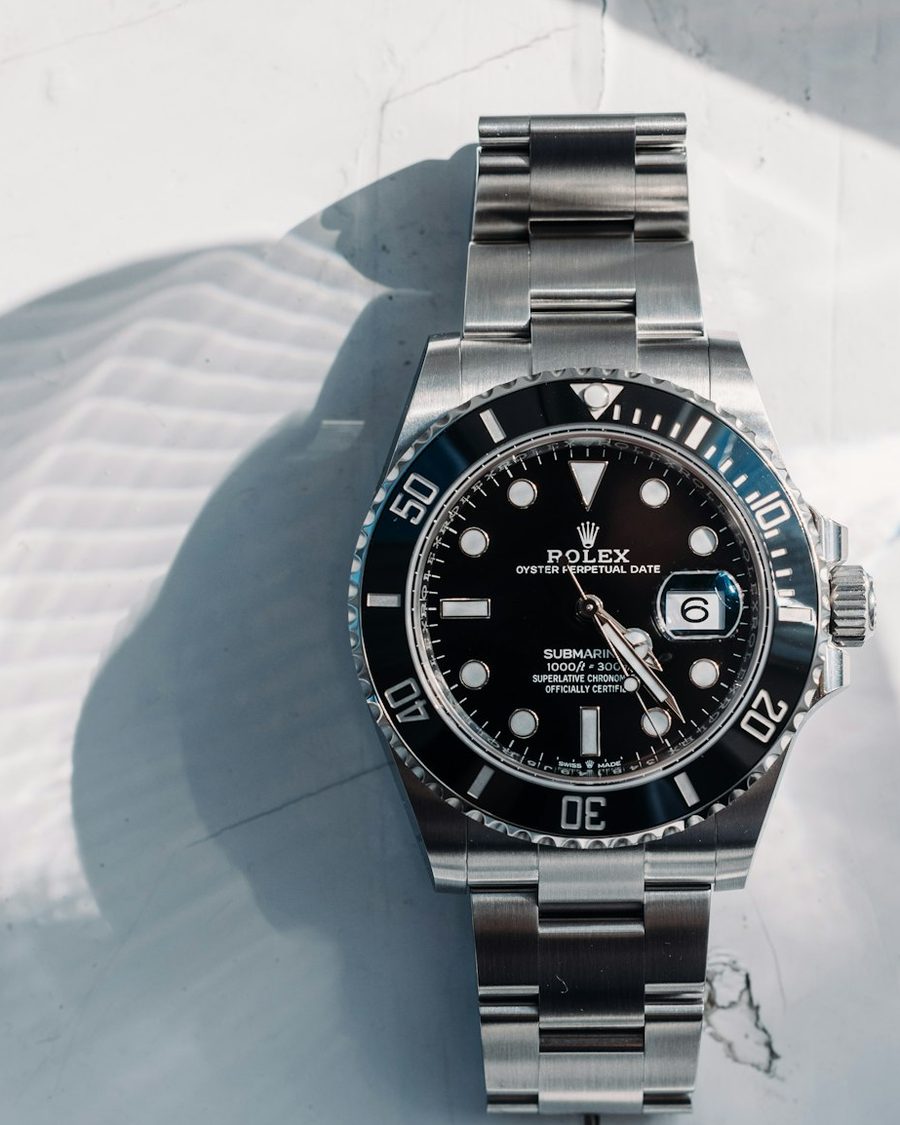
Where the sand meets the water · Photo: Hameen Reynolds / Unsplash

Every watch is built for something

Divers, chronographs, field watches, and more: what each type was made for, how to spot one, and the Rolex that fits each job.

Steel dive watch with a black ceramic bezel

Built for going underwater

Diver

A watch built to keep working, and stay readable, deep underwater.

What to look for

  • Water resistance of at least 100 meters. The diver's watch standard, ISO 6425, tests each rating at 125% of the depth.
  • A bezel that turns only one way to time the dive. A bump can only make the dive look longer, which is the safe mistake.
  • Hands and markers you can read in the dark from about 25 cm (10 inches) away.

Some add a helium escape valve, which only matters for commercial divers who live under pressure for days.

Rolex example: the Submariner. See its timeline
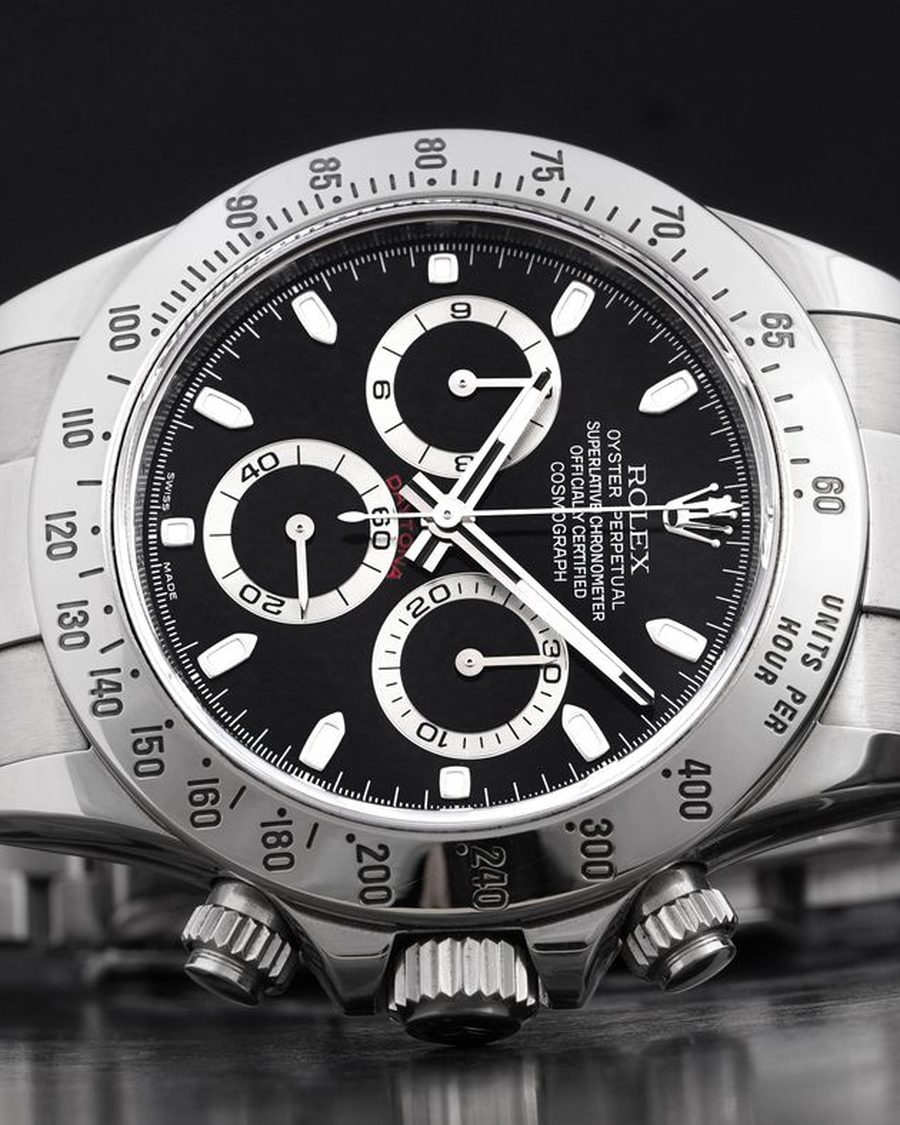
Steel chronograph with three small dials and a speed scale on the bezel

Built for timing things

Chronograph

A watch with a built-in stopwatch. Push a button to start, stop, and reset it.

What to look for

  • Two pushers next to the crown.
  • Small dials (subdials) that count the stopwatch's seconds, minutes, and hours.
  • Often a tachymeter: a speed scale on the bezel for timing a lap or a mile.

Not every chronograph is a racing watch. Divers, pilot watches, and even dress watches can have one.

Rolex example: the Daytona. See its timeline

Built for rough everyday use

Field

A simple, tough watch that grew out of the trench watches soldiers wore in World War I.

What to look for

  • A plain, easy-to-read dial, often dark with light-colored numbers.
  • Big Arabic numbers (1, 2, 3) instead of fancy markers.
  • A sturdy strap or bracelet, and no extra features.

Explorers adopted the style too, which is why the Rolex Explorer is often called a field watch.

Rolex example: the Explorer

Built for flying

Pilot

A watch made to be read in a split second in a cockpit.

What to look for

  • A high-contrast dial: big numbers, bold minute marks, and glowing hands.
  • Often a large case and an oversized crown you can turn while wearing gloves.
  • Sometimes a triangle at 12 o'clock to show which way is up.

In 1904 Cartier made the Santos for aviator Alberto Santos-Dumont, who couldn't check a pocket watch with both hands on the controls. In World War II, German “Flieger” pilot watches were a huge 55 mm.

Rolex example: the GMT-Master (born as a watch for airline crews)

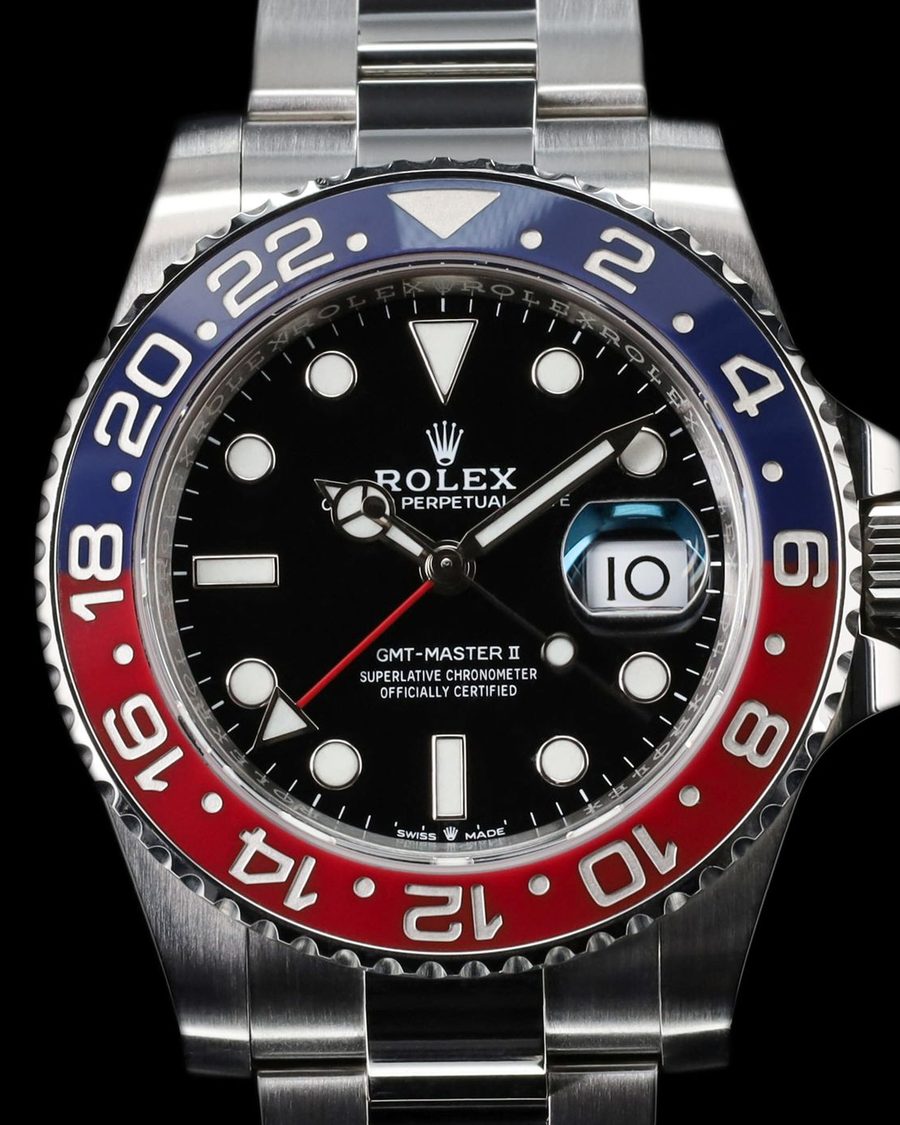
Steel GMT watch with a red and blue bezel

Built for two time zones

GMT / Travel

A watch that shows a second time zone with an extra hand.

What to look for

  • A fourth hand that goes around once every 24 hours.
  • Often a 24-hour scale on the bezel, so you can read home time and local time together.

Rolex built the GMT-Master in 1955 for long-haul flight crews, and Pan Am made it an official watch.

Rolex example: the GMT-Master II and Sky-Dweller. See its timeline
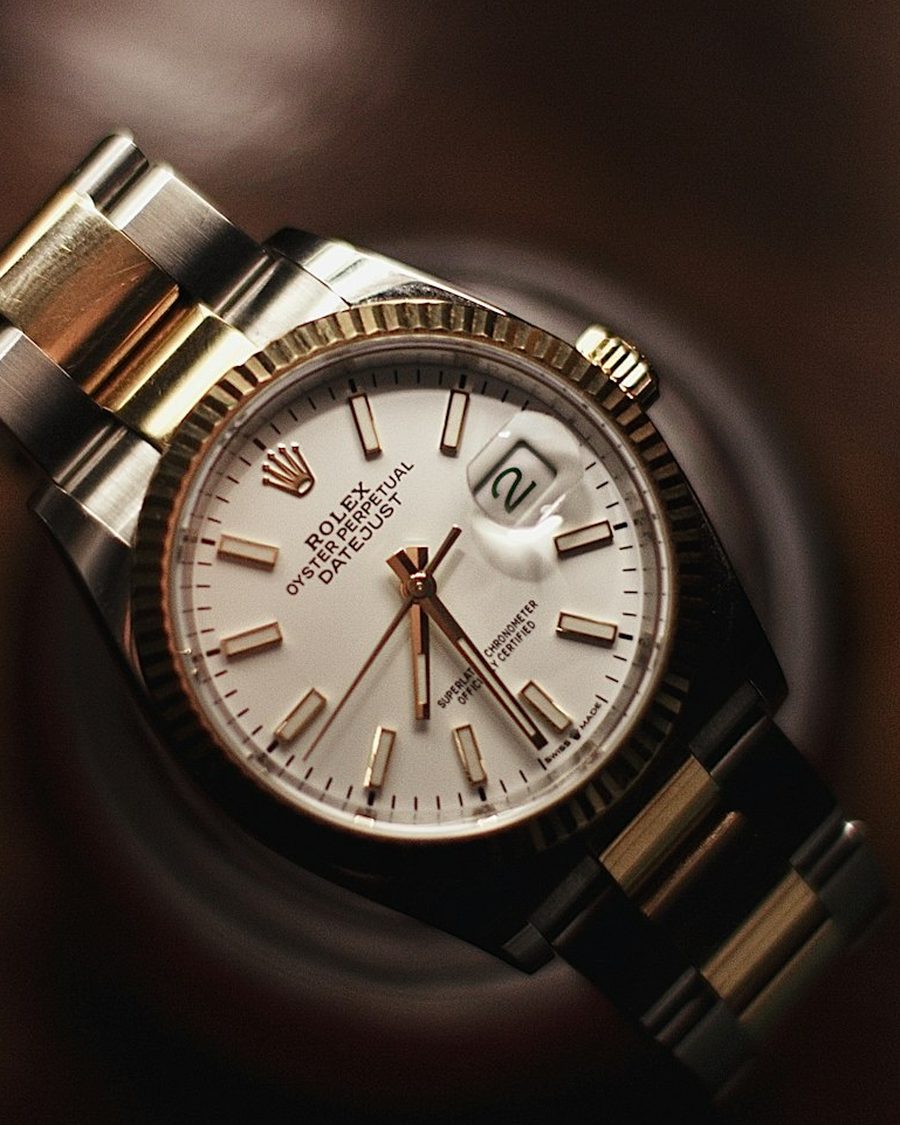
Two-tone watch with a cream dial

Built for suits and dinners

Dress

A thin, simple watch made to slide under a shirt cuff.

What to look for

  • A slim case, often 34 to 40 mm across and under 10 mm thick.
  • A clean dial with few extras, often in gold, on a leather strap.
  • Little water resistance. It's not one to swim in.

Rolex's dress line is the Perpetual 1908, which replaced the Cellini in 2023. Rolex calls the Datejust its classic watch, and the Day-Date is made only in gold or platinum.

Rolex example: the Datejust and Day-Date. See its timeline

Built for sailing races

Regatta

A watch with a countdown timer for the start of a sailing race, where a signal sounds 10 minutes before the gun.

What to look for

  • A countdown that runs from 10 minutes down to zero.
  • A quick way to start it right on the signal: the bezel on older Rolex models, the pushers on the 2026 version.
  • Often a big case. The Rolex Yacht-Master II is 44 mm.

The Rolex Yacht-Master II, launched in 2007, was the first watch with a programmable countdown and a mechanical memory.

Rolex example: the Yacht-Master II. See its timeline

What makes it tick

Any type above can run on any of these. A diver can be automatic or quartz.

  • Manual wind

    You turn the crown to wind the spring that powers the watch. The Daytona was hand-wound until 1988.

  • Automatic

    A weight inside swings as your wrist moves and winds the watch for you. Rolex patented its Perpetual rotor in 1931.

  • Quartz

    A battery and a vibrating quartz crystal keep time. Rolex even made its own quartz line, the Oysterquartz, from the late 1970s into the 2000s.

Sources and photo credits

Last checked November 8, 2026. Icons are drawn by Gulfshore Watch Co.

Sources

Photos

  • Diver: Patrick Langwallner, Unsplash License. Chronograph: Quang Viet Nguyen, Pexels License. GMT: Pexels, Pexels License. Dress: Yash Parashar, Unsplash License.