 Where the sand meets the water · Photo: Hameen Reynolds / Unsplash
One man, five letters, and a watch that could swim
How a 24-year-old in London built the most famous watch name in the world, and how every model got to where it is today.
An orphan with a big idea
Hans Wilsdorf was born in Bavaria in 1881 and lost both parents by age 12. In 1905, at 24, he started a company in London that sold watches. Back then, most men carried pocket watches. Wristwatches were seen as small, fragile, and not very accurate.
Wilsdorf thought the wristwatch was the future. He bought small, very precise movements from Switzerland and set out to prove they could keep time as well as any pocket watch. In 1908 he registered the name Rolex: short, easy to say in any language, and good-looking on a dial.
He spent the rest of his life proving his watches in the real world: in the English Channel, on Everest, and at the bottom of the ocean.
Three ideas that made Rolex
Accurate
The first wristwatch in the world to earn a Swiss chronometer certificate, an official stamp of accuracy.
Waterproof
The Oyster: a case with a screw-down bezel, back, and crown that keeps out water and dust.
Self-winding
The Perpetual rotor, a swinging weight that winds the watch as you move. Today almost every automatic watch works this way.
The Rolex timeline
From Wilsdorf's birth in 1881 to today.
- 1881
Hans Wilsdorf is born in Kulmbach, Bavaria (Germany). By age 12 he has lost both parents.
- 1905
At 24, Wilsdorf starts a watch-selling company in London. He believes a wristwatch can be both elegant and accurate, and fits his watches with small, precise Swiss movements made in Bienne.
- 1908
On July 2, he registers the name "Rolex" in Switzerland. He wanted a name that was short, easy to say in any language, and good-looking on a dial.
- 1910
A Rolex becomes the first wristwatch in the world to earn the Swiss chronometer certificate, an official stamp of accuracy.
- 1914
Britain's Kew Observatory awards a Rolex its "Class A" accuracy certificate.
- 1919
Rolex moves to Geneva, the center of Swiss watchmaking. Montres Rolex S.A. is registered there in 1920.
- 1926
The Oyster: the first waterproof and dustproof wristwatch. The bezel, case back, and crown all screw down tight. Wilsdorf named it after an oyster, which can sit underwater without harm.
- 1927
Swimmer Mercedes Gleitze crosses the English Channel wearing an Oyster. Rolex celebrates with a front-page ad in the Daily Mail.
- 1931
The Perpetual rotor: a free-swinging weight that winds the watch as your wrist moves. The first Oyster Perpetual is ref. 1858.
- 1945
The Datejust launches for Rolex's 40th birthday. The same year, after his wife Florence died in 1944, Wilsdorf sets up the Hans Wilsdorf Foundation.
- 1947
The first pilot to break the sound barrier is wearing a Rolex Oyster.
- 1953
Sir John Hunt's Everest team, the expedition that put Hillary and Tenzing on top, carries Oyster Perpetuals. The Explorer and the Submariner both arrive this year.
- 1955
The GMT-Master, built for long-haul flight crews. Pan Am makes it an official watch.
- 1956
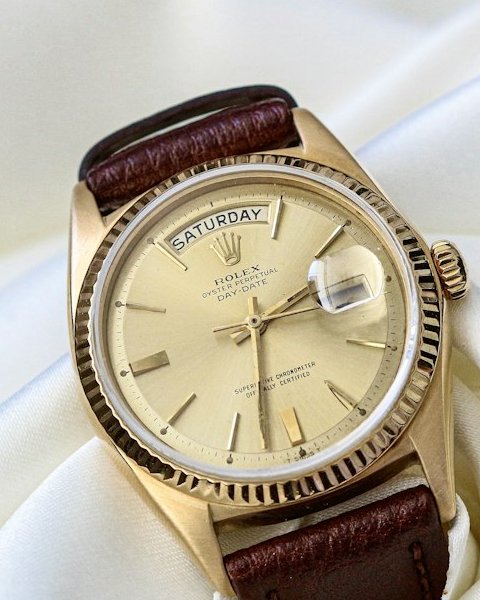
The Day-Date: the first wristwatch to spell out the day of the week in full.
- 1960
The bathyscaphe Trieste dives 10,916 meters into the Mariana Trench with an experimental Rolex strapped outside. It comes up still running. On July 6, Hans Wilsdorf dies, and his foundation becomes Rolex's owner.
- 1963
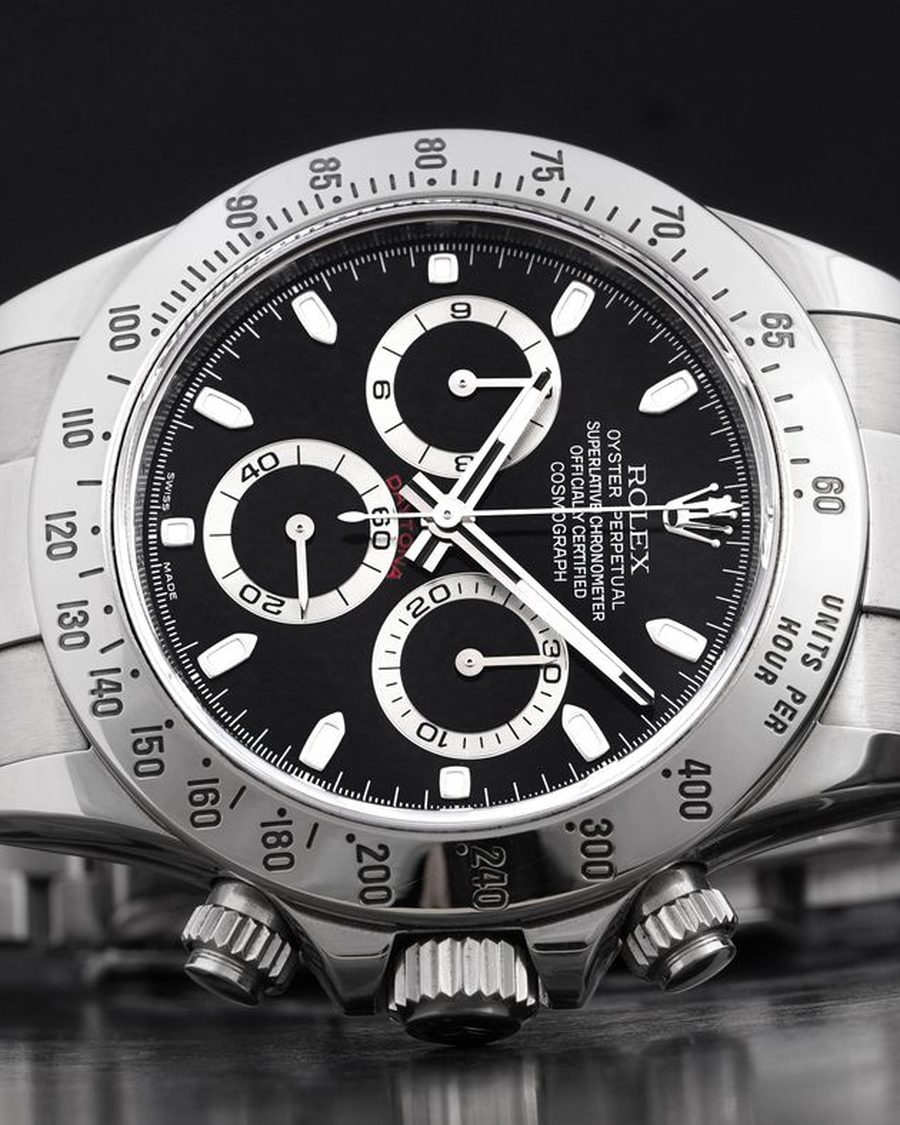
The Cosmograph Daytona, a stopwatch-style chronograph made for race car drivers.
- 1967
The Sea-Dweller, waterproof to 610 meters, with a helium escape valve for deep saturation divers.
- 2026
The Oyster turns 100. Rolex marks it with an exhibition called Oyster Story.
A charity, not a stock
Rolex has no stock-market shareholders. It belongs to the Hans Wilsdorf Foundation, a charity Wilsdorf set up in Geneva in 1945. When he died in 1960, he left his shares to it. That's a big part of why Rolex can think in decades instead of quarters.
Every model, reference by reference
Pick a model to see every main reference, oldest to newest, and what changed each time.
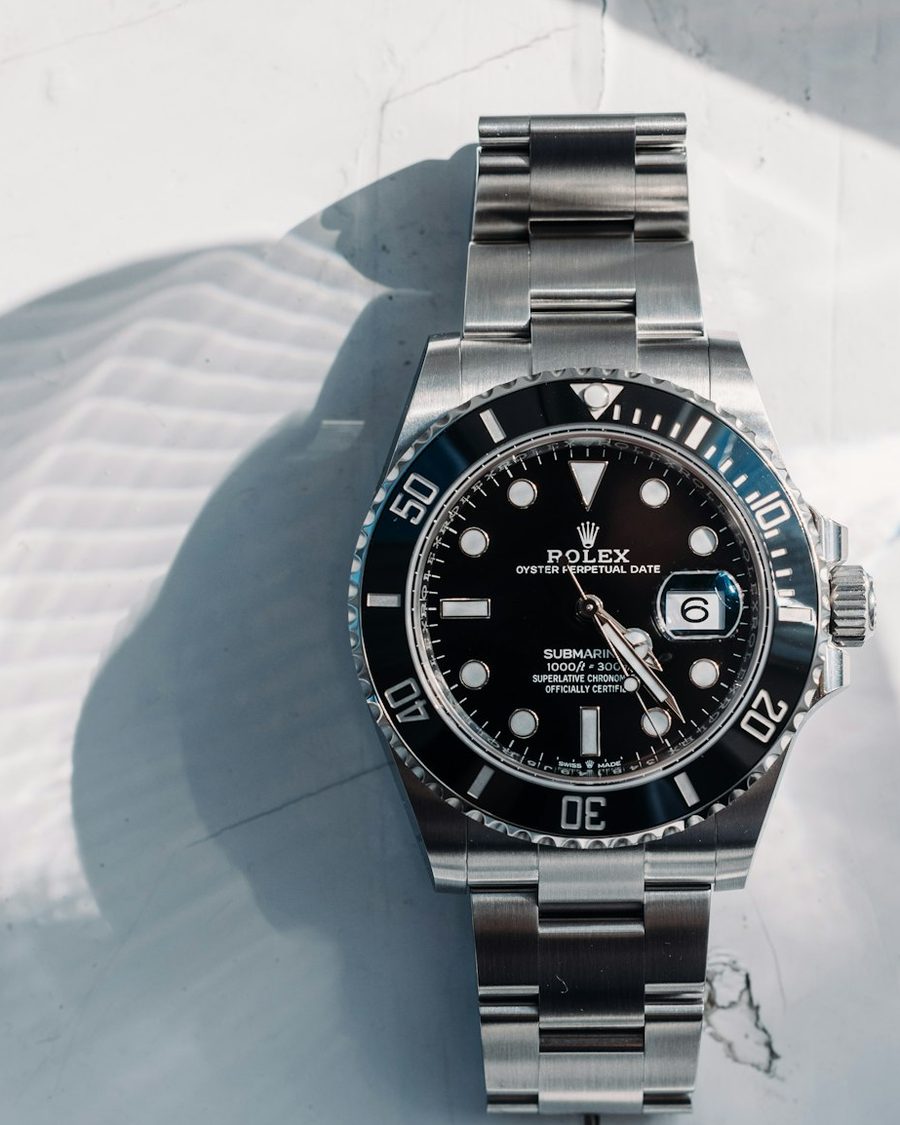
What's the difference between a diver, a chronograph, and a GMT? See the watch types.
Sources and photo credits
All facts on this page come from Rolex's own history pages and the sources below. Last checked November 7, 2026. Rolex is a trademark of Rolex SA; Gulfshore Watch Co. is not affiliated with Rolex.
Sources
- Rolex — History 1905–1919
- Rolex — History 1926–1945
- Rolex — History 1953–1967
- Rolex — A stroke of genius in five letters
- Rolex — Oyster Story: A visionary undertaking
- Rolex Newsroom — Oyster Story
- Rolex — The Oyster, 90 years of perpetual innovation (press kit PDF)
- Rolex Newsroom — History of Rolex visuals (PDF)
- Wikipedia — Hans Wilsdorf
- Oracle of Time — Who owns Rolex
Photos
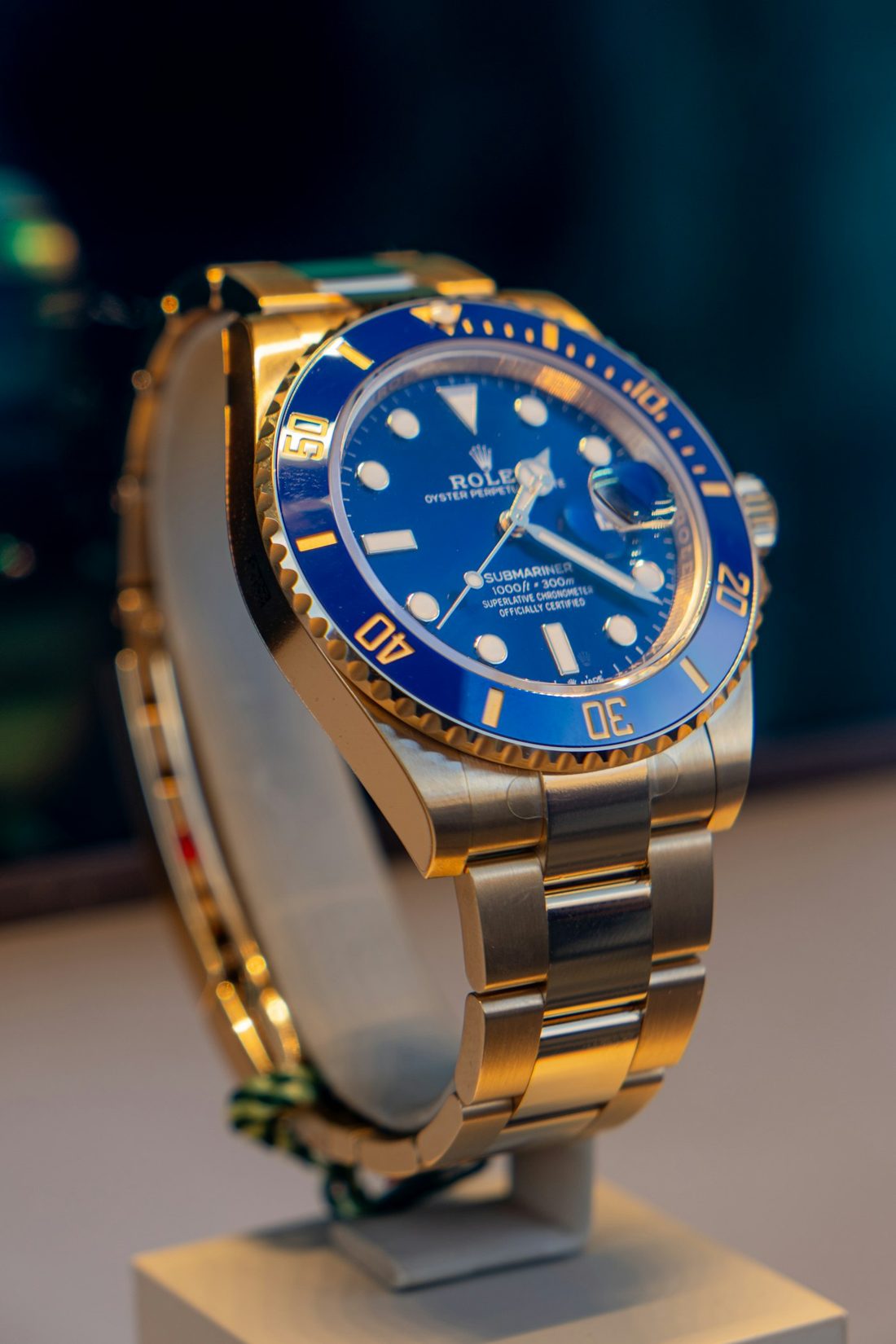
- Two-tone Submariner on a stand, by Nicolás Pinilla, Unsplash License
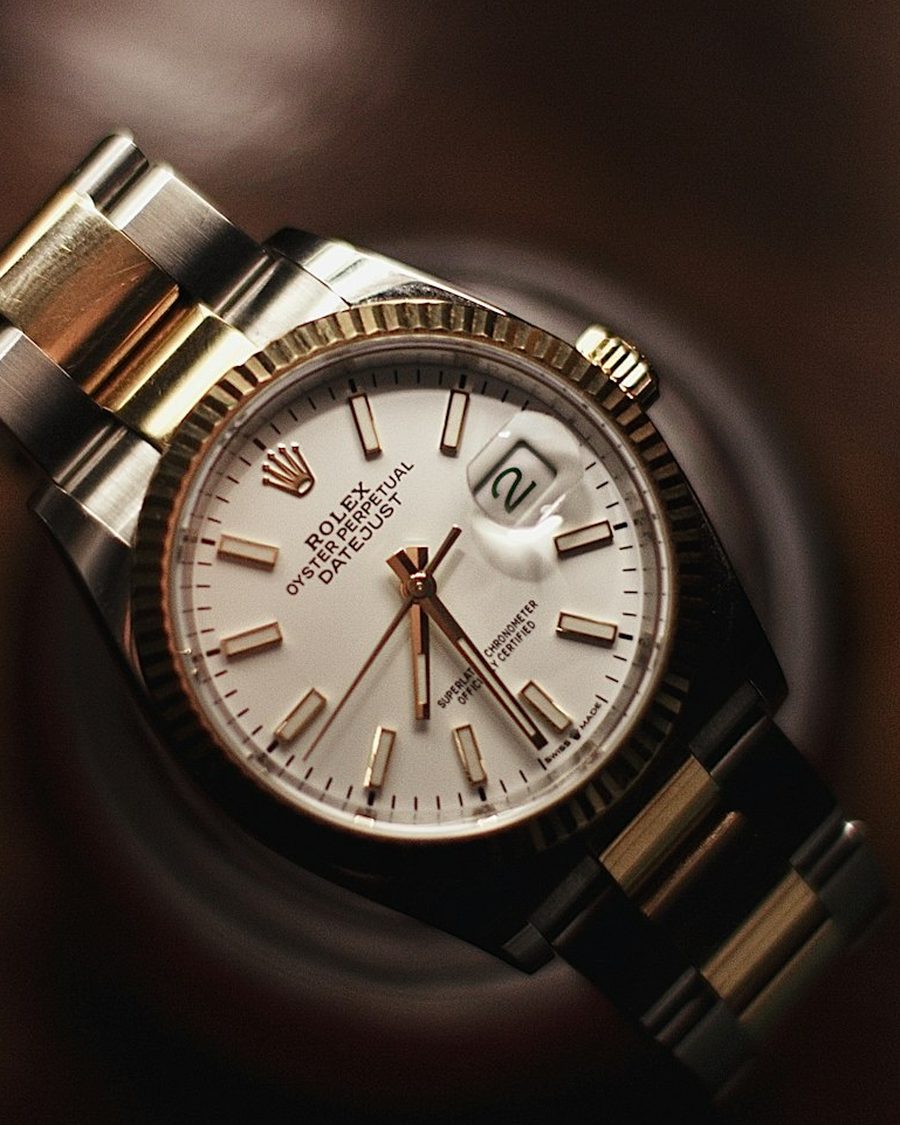
- Model photos are credited on each model's timeline page.